Panic in New York: Democrats Divided as Mamdani’s Rise Sparks Ideological Firestorm
New York City’s political scene has erupted into turmoil as Assemblyman Zohran Mamdani, a self-described democratic socialist and one of the most prominent Muslim voices in progressive politics, finds himself at the center of a deepening rift within the Democratic Party. What began as a local political contest has quickly evolved into a national debate over the future of the party, touching on religion, ideology, and power.
Mamdani’s rapid rise has stunned party insiders. Once dismissed as a fringe activist, he has become a leading figure in New York’s progressive movement and a symbol of generational change. His platform—centered on affordable housing, free public transit, and higher taxes on the wealthy—has electrified young voters and working-class communities who feel left behind by the establishment. But that same message has alarmed moderates who fear that Mamdani’s unapologetically socialist agenda could alienate swing voters and damage the Democrats’ broader electoral prospects.

The growing tension burst into public view after Mamdani criticized senior Democrats for being “too timid” in confronting corporate power and for failing to represent the city’s working people. His remarks were celebrated by progressives as a call for courage but condemned by centrists as divisive and reckless. Behind closed doors, party strategists now admit they are deeply split over how to respond to the new movement Mamdani represents.
Religion has also become a flashpoint. Mamdani, who is of Ugandan-Indian heritage and proudly Muslim, has faced both admiration and backlash for his outspoken positions on Middle East policy and social justice. Supporters see him as a bridge between communities and a voice for inclusivity; detractors accuse him of injecting identity politics and ideological radicalism into the heart of the Democratic brand. The controversy has spilled far beyond New York, with national media framing the dispute as evidence of a growing civil war within the party.
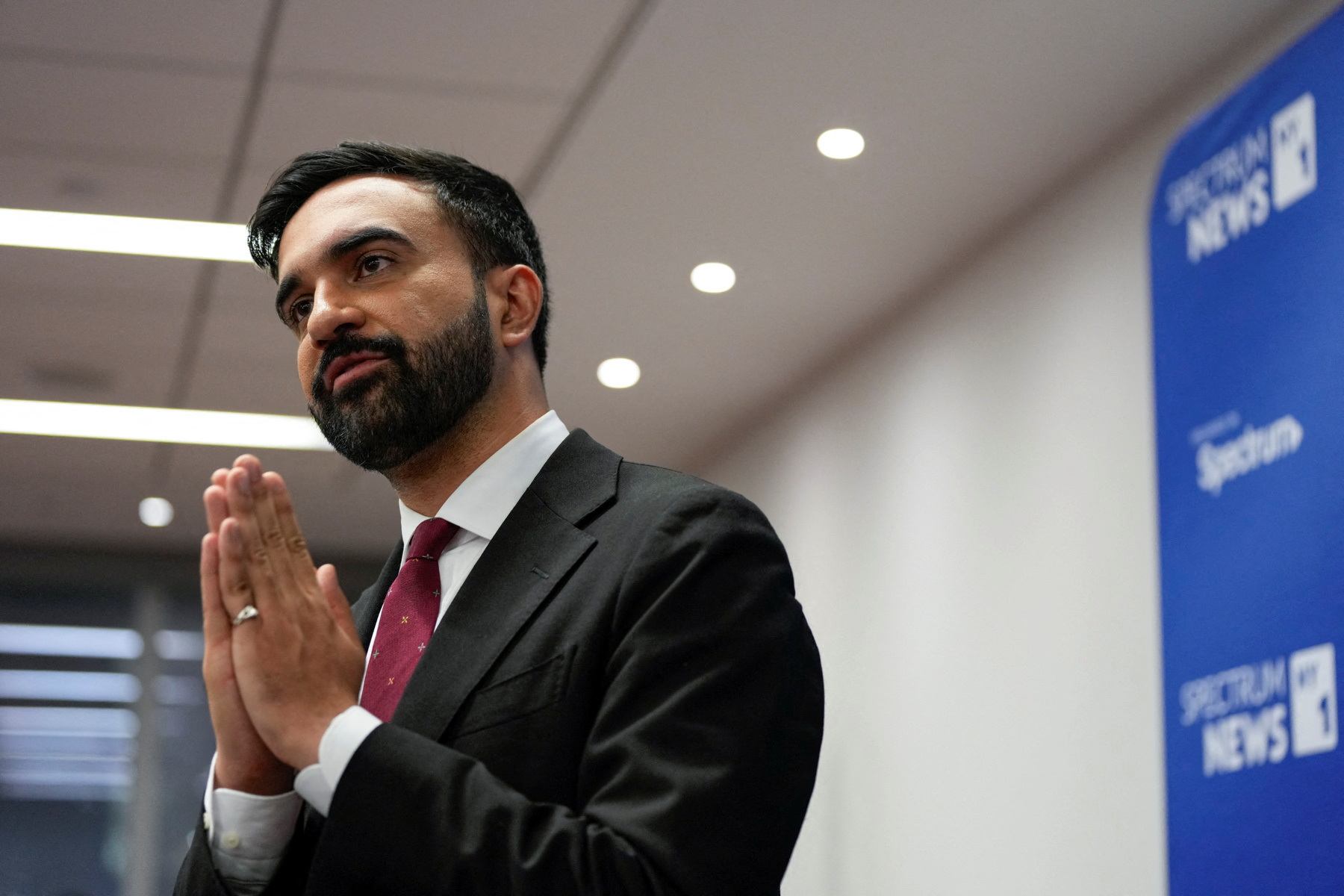
Republicans have seized on the chaos, using Mamdani’s rise to argue that Democrats are drifting toward extremism. Conservative commentators have portrayed him as proof that the party is losing touch with middle-class Americans, claiming that his brand of “socialism and identity politics” could alienate mainstream voters. Mamdani, for his part, dismisses such criticism as fearmongering, insisting that his campaign is rooted in compassion and fairness. “If fighting for working people makes me radical,” he told supporters at a recent rally, “then I’m proud to be radical.”
The Democratic establishment now faces a dilemma. Some argue the party must embrace figures like Mamdani to energize its base and reflect the diversity of its voters. Others warn that doing so risks deepening internal divisions and undermining national unity. What happens in New York may well shape how Democrats define themselves heading into the next election cycle.
For now, the atmosphere is tense. Donors are splitting, factions are forming, and social media debates are raging. Whether Zohran Mamdani ultimately rises or falls, one thing is clear: his movement has forced the Democratic Party to confront a question it can no longer avoid—what kind of party it truly wants to be.
